I. Introduction
In the annals of contemporary sociological theory, few texts have ruptured the epistemic foundations of the discipline as profoundly as Edward W. Said’s Orientalism, published in 1978. It demands an immersion into the sociology of knowledge, the mechanics of cultural hegemony, and the intricate, often invisible, relationships between power, representation, and identity. Orientalism is not merely a history of the European study of the Middle East; it is a theoretical investigation into how the “West”—the Occident—constructed the “East”—the Orient—not as an empirical reality, but as a discursive artifact designed to facilitate domination.
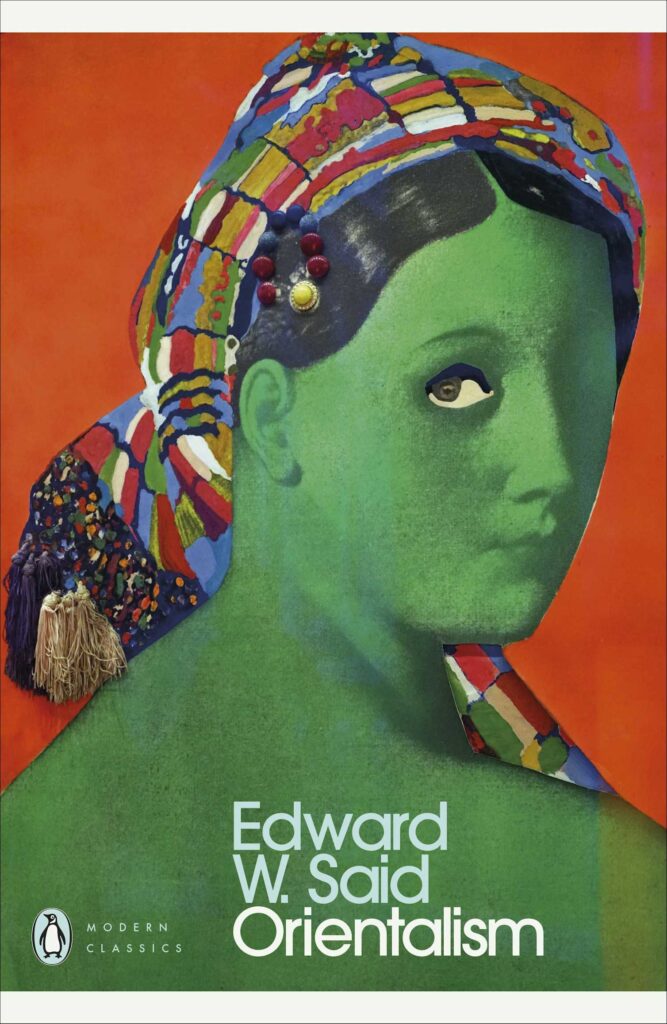
The central sociological premise that animates Said’s work is the rejection of the positivist assumption that knowledge is neutral. In classical sociology, particularly in the Weberian tradition, the scholar is often idealized as a detached observer, separating “facts” from “values.” Said upends this notion, arguing that when the subject of knowledge is a dominated “Other,” scholarship becomes inextricably entangled with the political power structures of its time. The Orient, therefore, is not a place that is simply “discovered” by the West; it is a place that is “Orientalized.” This process of Orientalization is a systematic exercise in cultural fabrication, where the agency of the human subject in the East is silenced and replaced by a static, textual representation generated in the West.
Definition: Academic, Ontological, and Corporate
The first dimension of Orientalism is Academic. Said defines this in the most traditional sense: “Anyone who teaches, writes about, or researches the Orient—and this applies whether the person is an anthropologist, sociologist, historian, or philologist—either in its specific or its general aspects, is an Orientalist, and what he or she does is Orientalism”. This definition locates the study within the university, the learned society, and the museum. It encompasses the institutional activities of organizations such as the Société Asiatique, founded in Paris in 1822, and the Royal Asiatic Society in London. While the term “Orientalist” has fallen out of favor in modern academia, often replaced by “Area Studies specialist” or “historian of the Middle East,” Said argues that the underlying doctrines and dogmas of the old Orientalism survive in the new designations. The academic definition provides the veneer of scientific legitimacy to the enterprise, presenting the accumulation of knowledge about the East as a disinterested pursuit of truth.
The second dimension is Ontological and Epistemological. This is a much broader, more pervasive definition. Said describes it as “a style of thought based upon an ontological and epistemological distinction made between ‘the Orient’ and (most of the time) ‘the Occident'”. This definition moves beyond the academy into the realm of general culture and literature. It posits a fundamental, almost metaphysical, difference between “Us” and “Them.” This style of thought accommodates a vast array of writers, thinkers, and politicians who may have little else in common. As Said notes, “This Orientalism can accommodate Aeschylus, say, and Victor Hugo, Dante and Karl Marx”. The unifying feature of this diverse group is their acceptance of the basic binary: the West is rational, developed, humane, and superior; the East is irrational, backward, barbaric, and inferior. This ontological divide is the bedrock upon which the specific theories of the academic Orientalists are built.
The third, and perhaps most critical definition for the political sociologist, is Corporate and Institutional. Here, Said analyzes Orientalism as a “Western style for dominating, restructuring, and having authority over the Orient”. Dating this specifically from the late eighteenth century, Said argues that Orientalism is not just a collection of texts but a material institution. It involves “dealing with the Orient—dealing with it by making statements about it, authorizing views of it, describing it, by teaching it, settling it, ruling over it”. This definition links knowledge directly to colonial administration. It suggests that the vast library of Orientalist scholarship was not an archive of passive learning but a “corporate institution” designed to manage the colonies. The “knowledge” produced by the scholar (e.g., the grammar of Arabic or the history of Islamic law) was the “power” used by the colonial governor to rule.
The Thesis: The Orient as a western construct
The overarching argument Said highlights throughout the work is that the Orient was not (and is not) a free subject of thought or action. It is a constituted object. “The Orient was Orientalized,” Said writes, not only because it was discovered to be “Oriental” in all those ways considered common by the nineteenth-century European, but because it could be made Oriental. This implies a relationship of power—of domination, of varying degrees of a complex hegemony.
Said is careful to clarify that he is not arguing that the Orient is merely a fantasy with no physical reality. “The Orient is not only adjacent to Europe; it is also the place of Europe’s greatest and richest and oldest colonies, the source of its civilizations and languages, its cultural contestant, and one of its deepest and most recurring images of the Other”. However, the “Orient” that appears in the books of the Orientalists is a representation that displaces the reality. The “value, efficacy, strength, apparent veracity of a written statement about the Orient therefore relies very little, and cannot instrumentally depend, on the Orient as such”. Instead, the statement relies on the authority of the Western discourse. The book becomes more real than the geography it describes.
For the sociology student, this introduction sets the stage for a rigorous examination of how cultures construct “the Other.” It challenges us to look beneath the surface of academic objectivity and to interrogate the political unconscious of our own disciplines. As we proceed to dissect the theoretical frameworks and historical genealogies Said employs, we must keep in mind this central thesis: that the “Orient” is a stage on which the West projects its own desires, fears, and will to power.
II. The Methodological Synthesis of Foucault, Gramsci, and Vico
One of the most intellectually demanding aspects of Orientalism is its methodological hybridity. Said does not rely on a single theorist but rather weaves together strands from divergent, and at times contradictory, philosophical traditions. The three primary theoretical pillars supporting his analysis are Michel Foucault, Antonio Gramsci, and Giambattista Vico. Understanding how Said synthesizes these thinkers—and the tensions that arise from this synthesis—is essential for a nuanced sociological reading of the text.
Foucault and the Discourse of Power
Said explicitly acknowledges his debt to the French post-structuralist Michel Foucault, particularly drawing on The Archaeology of Knowledge and Discipline and Punish. Foucault’s concept of discourse is central to Said’s definition of Orientalism.
In a sociological context, a discourse is not merely a linguistic exchange; it is a system of representation that governs the production of knowledge. Discourse defines the boundaries of what is thinkable and what is unspeakable in a given historical period. It regulates who has the authority to speak and what counts as valid “truth.” Said argues that “without examining Orientalism as a discourse one cannot possibly understand the enormously systematic discipline by which European culture was able to manage—and even produce—the Orient politically, sociologically, militarily, ideologically, scientifically, and imaginatively during the post-Enlightenment period”.
By employing the Foucauldian framework, Said is able to move beyond analyzing individual prejudice or racism. Orientalism is not simply a collection of lies told by biased individuals; it is a “regime of truth.” It is a structural system that pre-exists any individual scholar. When a 19th-century British administrator writes a report on “The Moslem Mind,” he is not merely expressing a personal opinion; he is operating within the rules of a discourse that has already defined the “Moslem” as a specific object of study with fixed characteristics.
Furthermore, Said adopts Foucault’s formulation of Power/Knowledge. Foucault argued that power and knowledge are mutually constitutive; there is no power relation without the correlative constitution of a field of knowledge, and no knowledge that does not presuppose and constitute at the same time power relations. In Orientalism, this is demonstrated by showing how the scholarly accumulation of philological, historical, and anthropological data about the East was directly tied to the imperial project. The dictionary of an Oriental language was a tool of the colonial army; the ethnographic study of a tribe was a tool of the colonial tax collector.
However, Said’s use of Foucault is not total. Foucault is famously anti-humanist, declaring the “death of the author” and viewing individuals as mere functions of discourse. Said, by contrast, retains a strong humanist belief in the agency of the individual author. He argues that individual writers—like Flaubert, Nerval, or Lane—leave a “determining imprint” on the discourse. This refusal to completely dissolve the subject into the structure creates a theoretical tension that critics have often pointed out. Said uses Foucault to describe the prison of the discourse, but he refuses to believe that the prisoners are entirely silenced by the walls.
Gramsci and the Persistence of Hegemony
To address the limitations of Foucault’s “anonymous” power and to explain the durability of Orientalism within civil society, Said turns to the Italian Marxist Antonio Gramsci. The key concept here is Hegemony.
Gramsci distinguished between direct domination (force, exercised by the state/political society) and hegemony (consent, exercised by civil society). Hegemony works through culture, education, the media, and the family. It is the process by which a dominant group persuades the subordinate groups to accept its own moral, political, and cultural values as the “natural” order of things.
Said argues that Orientalism is a form of cultural hegemony that permeates Western civil society. “It is a hegemony of European ideas about the Orient, themselves reiterating European superiority over Oriental backwardness”. This hegemony is so powerful that it overrides the possibility of independent thought. It filters into the consciousness of the poet, the novelist, and the average citizen, creating a “collective notion identifying ‘us’ Europeans as against all ‘those’ non-Europeans”.
Within this Gramscian framework, Said introduces the concept of Flexible Positional Superiority. He writes: “In a quite constant way, Orientalism depends for its strategy on this flexible positional superiority, which puts the Westerner in a whole series of possible relationships with the Orient without ever losing him the relative upper hand”. This is a crucial sociological insight. It means that whether the Westerner approaches the Orient as a conqueror, a scientist, a tourist, or a humanitarian aid worker, the structural relationship remains one of superiority. The “position” is flexible—it can change from aggression to benevolence—but the “superiority” is constant. The Westerner is always the subject who looks, studies, and judges; the Oriental is always the object who is looked at, studied, and judged.
Vico and the Agency of History
A third, often overlooked influence in Orientalism is the 18th-century Italian philosopher Giambattista Vico. Said was a scholar of Vico before he wrote Orientalism, and Vico’s axiom that “men make their own history” is central to Said’s humanism.
While Foucault might suggest that history is a series of rupture and discontinuities driven by anonymous discursive shifts, Vico allows Said to argue that history is a human creation. “The Orient was Orientalized” implies an active process performed by human agents. It was not a natural occurrence. By invoking Vico, Said emphasizes the constructedness of the Orient. If men make their own history, then they also make their own geographies and their own cultural identities. The Orient is a “man-made” entity.
This Viconian perspective provides the ethical grounding for Said’s critique. If the Orient is a human construction, then it can be deconstructed. It is not an immutable fact of nature (as the essentialists would argue) but a historical product of human will and power. This opens the door for resistance and change—a possibility that a strictly Foucauldian analysis might foreclose.
The Methodological Paradox: A Sociological Critique
Critics such as James Clifford and Aijaz Ahmad have argued that Said’s blending of Foucault and Gramsci leads to a “methodological paradox”. Foucault’s discourse analysis is generally anti-representational (there is no “truth” behind the discourse), while Gramsci’s ideology critique implies that there is a “real” history that is being obscured by ideology.
Said has been accused of vacillating between claiming that Orientalism is a misrepresentation of the real Orient (a Gramscian/humanist view implying a “real” Orient exists and can be known) and claiming that the Orient is entirely a construction of discourse (a Foucauldian view implying there is no “real” Orient outside of the text).
However, from a sociological perspective, this “paradox” can be viewed as a strategic hybridity. Said uses Foucault to analyze the textual mechanics of the discipline—how books refer to other books and create a system of citation. He uses Gramsci to analyze the political function of the discipline—how it serves the interests of imperialism and secures the consent of the governed. And he uses Vico to retain the moral agency of the critic, allowing him to condemn the consequences of this system. This eclectic methodology allows Said to tackle Orientalism as both a system of meaning (culture) and a system of force (politics).
III. The Scope of Orientalism: Imaginative Geographies and the Textual Attitude
Having established the definitions and theoretical grounding, Said moves in the first chapter of the book to the mechanics of how the Orient is constructed in the Western mind. This involves two key sociological concepts: Imaginative Geography and the Textual Attitude. These concepts explain how the physical reality of the East is transmuted into a cultural concept within the West.
Imaginative Geography: The Phenomenology of Distance
Sociology teaches that space is not merely a physical container but a social production. Said takes this further with the concept of “Imaginative Geography.” He argues that the “Orient” is almost a European invention. It is a way of dividing the world to make it manageable.
Imaginative geography creates a boundary between “Us” and “Them.” Said writes: “Imaginative geography and history help the mind to intensify its own sense of itself by dramatizing the distance and difference between what is close to it and what is far away”. This binary is ontological. Europe is rational, virtuous, mature, and “normal.” The Orient is irrational, depraved, childlike, and “different.” The geography acts as a mirror: the West defines itself by looking at what it is not.
Said argues that this geography creates a “poetics of space” where the “vacant or anonymous reaches of distance are converted into meaning”. The “Orient” becomes a repository for Western desires and fears. It is not just a place on a map; it is a topos of the imagination—a place of romance, exotic beings, haunting memories, and remarkable experiences.
Crucially, the borders of this imaginative geography are fluid and arbitrary. For the Americans, the Orient often means East Asia (China and Japan). For the British and French (Said’s primary focus), it meant the Near East, the Holy Land, and India. The unity of the “Orient” is a fiction; there is no natural bond between a Bedouin in Arabia and a samurai in Japan, yet Orientalism groups them under a single imaginative geography. This grouping serves the needs of the Western observer, not the reality of the diverse peoples who live in those regions.
The Textual Attitude: Quixotism and the Sedimentation of Discourse
One of Said’s most profound insights is the “Textual Attitude.” This occurs when a human being confronts a reality that is unknown or threatening and retreats to a text for guidance. If the reality contradicts the text, the textual attitude dictates that the reality is false, and the text is true.
Said likens Orientalists to Don Quixote, the ultimate victim of the textual attitude. Quixote reads so many romances of chivalry that he imposes that textual world upon the reality of the Spanish countryside; a windmill becomes a giant because the text says giants exist. Similarly, Orientalists read about the Orient in books and then impose that bookish knowledge upon the actual East.
“It seems a common human failing to prefer the schematic authority of a text to the disorientations of direct encounters with the human,” Said writes. The written statement about the Orient acquires a presence and authority that displaces the real Orient. The text creates the reality. A description of a lion in a book is preferred to the actual lion encountered in the bush because the lion in the book is fierce, noble, and unchanging, while the real lion might be sleeping or sickly.
This reliance on texts leads to Citationality. Orientalism is a self-referential system. A writer like Gustave Flaubert or Gérard de Nerval does not just look at the East; he cites previous writers like Edward William Lane or Silvestre de Sacy. The discourse is built on a “cumulative sedimentation” of texts. Validity is judged not by accuracy to the object, but by fidelity to the canon of previous Orientalist works. If a new scholar’s observations contradict the “classic” texts, the new scholar is often dismissed or corrected. The “Orient” thus becomes a textual construct, a library of books talking to other books, with the actual people of the East excluded from the conversation.
This exclusion is captured in the epigraph Said chooses from Karl Marx: “They cannot represent themselves; they must be represented”. Because the Oriental is viewed through the lens of texts that describe him as passive, irrational, and chaotic, he is deemed incapable of self-representation. The Orientalist scholar, therefore, assumes the role of the voice for the voiceless. He speaks for the Oriental, interpreting his silence and imposing a coherent (Western) narrative upon his existence.
Napoleon in Egypt: The Modern Origin
Said identifies Napoleon Bonaparte’s invasion of Egypt in 1798 as the inaugural moment of modern Orientalism. This was not a typical military invasion; it was a scientific one. Napoleon brought with him an army of scholars, scientists, and artists—the savants.
Their goal was to document Egypt entirely, to render it fully visible to the European eye. The result was the monumental Description de l’Égypte, a multi-volume work that cataloged everything from the Sphinx to the anatomy of Egyptian insects. Said argues that this project exemplifies the “corporate” nature of Orientalism. The Description was an act of appropriation. By classifying, measuring, and drawing Egypt, the French “possessed” it intellectually even as they failed to hold it militarily. The Description displaced the real Egypt with a European representation of Egypt, one that was orderly, scientific, and available for consumption in the libraries of Paris. This established the pattern for the next two centuries: knowledge of the Orient would be produced by the West, for the West, often in the service of conquest.
IV. The Genealogy of the Discipline: Sacy, Renan, and the Secularization of Religion
Said traces the intellectual modernization of Orientalism to the late 18th and 19th centuries. He argues that during this period, the study of the East shifted from a religious paradigm (based on Biblical history and Christian polemics against Islam) to a secular, scientific paradigm. However, this secularization did not remove the prejudice; it merely repackaged it in the language of science, specifically philology (the study of languages) and anthropology. Two figures are paramount in this transition: Silvestre de Sacy and Ernest Renan.
Silvestre de Sacy: The Didactic Tableau and the Chrestomathy
Silvestre de Sacy (1758–1838) is presented by Said as the father of modern Orientalism. A French nobleman and professor, Sacy institutionalized the field, training generations of scholars who would dominate the discipline across Europe.
Sacy’s primary contribution was the Chrestomathy (specifically the Chrestomathie arabe, 1806). A chrestomathy is an anthology of text excerpts designed for language learning. Said argues that the chrestomathy is a potent symbol of Orientalist power. It involves extracting snippets of texts, tearing them from their original historical and cultural context, and rearranging them for a European student.
This process reduces the Orient to a Tableau—a frozen series of pictures or displays. Sacy treated the Orient as a pedagogical object. He favored the excerpt and the summary over the whole. By reducing the vast complexity of the Orient to a set of representative samples (a poem here, a legal document there), Sacy made the Orient “visible” and “manageable” for the West.
Furthermore, Sacy established the necessity of the Orientalist as Mediator. He presented the Orient as too chaotic, obscure, and difficult for the average European to understand directly. The “raw” Orient was dangerous and unintelligible. The Orientalist expert was required to intervene, to translate, to order, and to explain the Orient to the West. Sacy’s work “virtualized” the Orient, turning it into a classroom subject, a static object of study that existed to be learned by the European. The living reality of the Arab world was secondary to the grammatical rules and vocabulary lists constructed in Paris.
Ernest Renan: The Philological Laboratory and the Inequality of Races
If Sacy was the pedagogue who organized the classroom, Ernest Renan (1823–1892) was the scientist who worked in the laboratory. Renan brought the immense prestige of the new science of philology (comparative linguistics) to Orientalism.
Renan treated language as a specimen in a laboratory. He engaged in the “vivisection” of languages. By breaking languages down to their roots and grammatical structures, Renan believed he could uncover the soul and mental capacity of the people who spoke them. He famously proposed a binary classification of languages: the Indo-European (Aryan) family and the Semitic family.
This linguistic classification became the basis for a racist anthropology. Renan argued that Indo-European languages were dynamic, organic, regenerative, and capable of philosophy, science, and progress. Semitic languages (Arabic and Hebrew), by contrast, were inorganic, static, arrested in development, and incapable of complex philosophical thought.
Renan declared: “I am the first to recognize that the Semitic race, compared to the Indo-European race, truly represents an inferior combination of human nature”. Said highlights how Renan secularized religious prejudice. The old Christian hatred of Islam (as a heresy) and Judaism (as the rejecter of Christ) was transformed into a “scientific” linguistic theory of Semitic inferiority.
Through Renan, the Orient became a “monstrous” fossil. It was a place that had a history (the biblical past) but no longer participated in history. The Semites were viewed as a people who had once been great (in the time of the prophets) but were now exhausted and stagnant. It was the Orientalist’s job to study the “dead” Orient in the laboratory, much like a biologist studies a preserved specimen. This scientific veneer gave racism an authority that was difficult to challenge, as it was presented as the objective result of linguistic analysis.
Edward William Lane: The Invisible Observer
Alongside the French tradition, Said analyzes the British contribution, typified by Edward William Lane (1801–1876), author of Manners and Customs of the Modern Egyptians (1836). Lane represents the Orientalist Observer. He lived in Egypt, wore local dress, and learned the language perfectly. Yet, Said argues that Lane never “went native.” He maintained a rigid distance.
Lane’s book is written from the perspective of an invisible, omniscient narrator. He describes the Egyptians with meticulous detail, cataloging their habits, prayers, and domestic lives. But he treats them as specimens. The Egyptians are always the objects of his gaze; they never look back. Lane’s authority comes from his ability to be in the Orient but not of it. He extracts information and exports it to England, where it becomes the definitive text on “Modern Egyptians,” cited by generations of later writers (including Nerval and Flaubert) as the absolute truth.
V. The Imaginative Geography of Desire: Flaubert, Sex, and the Silent Other
While Sacy, Renan, and Lane represent the scholarly/scientific pole of Orientalism, Said also dedicates significant analysis to the literary/imaginative pole. This includes writers like Chateaubriand, Gérard de Nerval, and most importantly, Gustave Flaubert. In this section, Said explores how the Orient became a canvas for European sexual fantasies and the construction of the “Oriental Woman.”
The Sexualization of the Orient
A crucial component of Latent Orientalism (the unconscious framework) is the gendered power dynamic. Said argues that Orientalism is an exclusively male province that views itself and its subject with sexist blinders. The Orient is consistently conceptualized as feminine—passive, mysterious, sensual, and awaiting Western dominance.
The West, conversely, is masculine, active, rational, and penetrating. The relationship between the two is often framed in sexual metaphors: the West “penetrates” the secrets of the East; the East is “supine” and “malleable”. The colonial conquest is reimagined as a sexual conquest.
Flaubert and Kuchuk Hanem: The Prototype
Said uses Flaubert’s travel writings from Egypt, specifically his encounter with the Egyptian courtesan Kuchuk Hanem, as a prototype of this dynamic. Flaubert writes about her extensively in his letters and journals. She dances for him, sleeps with him, and becomes the symbol of the “Oriental Woman”—sensual, dangerous, and exotic.
However, Said points out a critical silence: Kuchuk Hanem never speaks. She never represents herself. Flaubert speaks for her. He describes her body, her movements, and her smell, but her thoughts and emotions are absent. She is merely a body, a “machine” for his pleasure, and a symbol of the “Other”.
Said writes: “She is less a woman than a display of impressive but verbally inexpressive femininity”. Flaubert projects his own fantasies onto her. In Victorian Europe, sexuality was repressed and regulated. The Orient, in the European imagination, became the place where those repressions could be lifted. It was a “sexual utopia” of licentiousness. But this utopia was a construct of the Western male mind. Flaubert’s Kuchuk Hanem is not a real Egyptian woman; she is a literary character created to satisfy the European desire for the exotic.
This episode illustrates the Marxian theme perfectly: the Oriental cannot represent herself; she must be represented. Her silence is the condition of Flaubert’s eloquence. If she were to speak, to assert her own agency and humanity, the fantasy would collapse. The Orientalist discourse requires the silence of the Other to function.
VI. Latent and Manifest Orientalism
In Chapter Three, “Orientalism Now,” Said introduces a structural-functionalist distinction that is vital for understanding how Orientalism survives political changes and transitions into the modern era. He distinguishes between Latent Orientalism and Manifest Orientalism. This distinction explains the resilience of the discourse.
Latent Orientalism: The Unconscious Stability
Latent Orientalism refers to the unconscious, untouchable certainty about what the Orient is. It is the deep structure of the discourse that remains constant over time.
- Characteristics: Latent Orientalism posits that the Orient is separate, eccentric, backward, silently different, sensual, and passive. It views the Orient as having an inherent tendency towards despotism and away from progress. It assumes that the “Oriental mind” is fundamentally different from the “Western mind.”
- Stability: This layer does not change. Whether a writer is a 19th-century romantic poet like Nerval or a 20th-century policy analyst like Henry Kissinger, the Latent Orientalist assumption is that the “East” is fundamentally different and inferior to the “West.” This “unconscious positivity” is the bedrock of the dogma.
Manifest Orientalism: The Changing Surface
Manifest Orientalism refers to the stated views, the specific knowledge, the policy decisions, and the economic data about the Orient.
- Fluidity: This layer changes. Knowledge about Oriental languages improves; borders shift; new trade deals are signed; new archaeological discoveries are made. Manifest Orientalism is the visible tip of the iceberg—the books, the articles, the government reports.
- Relation to Latent: Said argues that whatever changes occur in Manifest Orientalism (e.g., learning more about Islamic law or discovering oil), the Latent Orientalism (the belief that Islamic law is inherently stagnant or that Arabs are incapable of managing their own resources) remains intact. The new facts are simply fitted into the old framework.
Table 1: The Structure of Orientalist Discourse
| Feature | Latent Orientalism | Manifest Orientalism |
|---|---|---|
| Definition | The unconscious, underlying certainty and assumptions about the Orient. | The spoken, written, and acted-upon views, policies, and specific knowledge. |
| Nature | Static, unanimous, durable, stable. | Fluid, changing, accumulating, responsive to events. |
| Content | Orient is backward, sensual, passive, feminine, despotic, irrational. | Linguistic facts, historical dates, trade statistics, colonial policies, archaeological data. |
| Function | Provides the justification and framework for domination. | Provides the material and vocabulary to execute domination. |
| Example | The belief that “Arabs understand only force” (a constant trope). | A specific military strategy (e.g., bombing) or diplomatic treaty based on that belief. |
This distinction is crucial for the sociologist because it explains why “better knowledge” or “more facts” do not necessarily cure Orientalism. One can be an expert in Manifest Orientalism (knowing every date and fact about the Ottoman Empire) while still being completely trapped in Latent Orientalism (believing that the Ottomans were culturally destined to decline because they were Semites).
VII. Orientalism in the Modern Era
In the final section of the book, Said analyzes the shift in the center of gravity of Orientalism from Europe to the United States after World War II. With the decline of the British and French empires, the US emerged as the new global superpower with vital strategic interests in the Middle East (oil, Israel, Cold War containment).
From Philology to Social Science: The Area Studies Model
While European Orientalism was rooted in philology and history (the study of classical texts), American Orientalism is rooted in social science and policy studies.
- Area Studies: The old “Orientalist” departments were rebranded as “Area Studies” (e.g., Department of Near Eastern Studies). This change was driven by the Cold War and the need for strategic knowledge to manage the post-colonial world. The government and foundations (like Ford and Rockefeller) funded these centers to produce knowledge useful for policy.
- The Policy Expert: The figure of the detached scholar (like Renan in his library) was replaced by the “policy expert” who advises the State Department or the Pentagon. However, Said argues that the Latent Orientalism remains the same. The “Arab Mind” is still viewed as static, irrational, and requiring Western intervention.
- The “Clash of Civilizations”: Said anticipates the “Clash of Civilizations” thesis (later popularized by Samuel Huntington, but present in the work of Bernard Lewis). He argues that modern pundits maintain the binary of a rational, democratic West versus a rage-filled, irrational Islam. This binary serves to justify military interventions and support for dictatorial regimes that are allied with the West.
The Representation of Islam in Media
Said extends his critique to the mass media (a theme he expands in his later book Covering Islam). The image of the “terrorist” or the “oil sheikh” in Hollywood movies, news reports, and cartoons is the modern manifestation of the 19th-century “lustful Turk” or “religious fanatic.”
These images are not innocent entertainment; they are part of the discourse that dehumanizes the Oriental Other. They make it acceptable to bomb Oriental cities or impose sanctions on Oriental populations, because those populations are perceived as fundamentally “different” and “dangerous.” The “textual attitude” persists: the American public “knows” the Arab world through the texts (and images) of the media, rather than through direct human encounter.
VIII. Critical Reception and Debate
For sociology students, it is essential to understand that Orientalism is not a sacred text but a polemic that sparked intense, often vitriolic, debate. The reception of the book reveals the fault lines in modern sociology, history, and post-colonial studies.
The “Factuality” Defense: Bernard Lewis
Said’s primary antagonist in the book (and in subsequent public debates) was Bernard Lewis, a prominent British-American historian of the Middle East.
- The Critique: Lewis accused Said of politicizing scholarship. He argued that Orientalism was a genuine, humanistic pursuit of knowledge, driven by curiosity, not just power. Lewis pointed out factual errors in Said’s text (e.g., mistranslations, historical dates) and accused Said of ignoring the German tradition of Orientalism. German scholars studied the East intensely but Germany had no colonial empire in the Middle East—a fact Lewis claimed disproved Said’s thesis that Orientalism was a tool of imperialism.
- Said’s Rejoinder: Said argued that Lewis’s obsession with “facts” missed the point of “discourse.” A discourse is not about individual facts being true or false; it is about the system that gives those facts meaning. Even if German scholars had no colonies, they participated in the intellectual authority of Europe over the Orient. Said viewed Lewis as the epitome of the “corporate” Orientalist—a scholar whose work served the neo-imperial interests of the US foreign policy establishment.
The Marxist Critique: Aijaz Ahmad
Aijaz Ahmad, a Marxist theorist, offered a critique from the Left in his book In Theory (1992).
- Essentialism and “Orientalism in Reverse”: Ahmad argued that Said committed the same error he accused Orientalists of: Essentialism. By arguing that the West has always misrepresented the East (from Aeschylus to Kissinger), Said portrays the West as a monolithic, unchanging entity. Ahmad calls this “Orientalism in Reverse”—romanticizing the East by implying that only an “authentic” Easterner can understand it.
- Neglect of Material History: Ahmad criticized Said for prioritizing “discourse” (text/culture) over “political economy” (class/capitalism). Ahmad argued that colonialism was driven by the logic of global capitalism and class struggle, not just by a “textual attitude” or ancient Greek hatred of Persians.
Post-Colonial Nuance: Homi Bhabha
Homi Bhabha, a key figure in post-colonial theory, built on Said’s work but complicated the binary in The Location of Culture.
- Ambivalence and Mimicry: Bhabha argues that colonial discourse is not as stable or monolithic as Said suggests. It is marked by “ambivalence.” The colonizer wants the colonized to be “like him” (civilized, Anglicized) but not too like him (which would dissolve the hierarchy and the justification for rule). This leads to “Mimicry”—the colonized subject is “almost the same, but not quite”.
- Hybridity: Bhabha suggests that the colonial encounter produces “Hybridity,” a third space where culture is negotiated and authority is destabilized. This challenges Said’s somewhat rigid binary of active oppressor vs. passive victim, suggesting a more complex interplay of identity.
IX. Conclusion
Orientalism concludes not with a call to replace “Orientalism” with “Occidentalism” (a hateful stereotype of the West). Said is fundamentally a humanist who believes in the possibility of a common human experience.
He advocates for Secular Criticism—a criticism that is skeptical of all totalizing systems, whether religious, nationalist, or imperial. He calls for Contrapuntal Reading (a concept he elaborates in Culture and Imperialism), which means reading texts to reveal the intertwined histories of colonizer and colonized. We must read Jane Austen’s Mansfield Park and the history of Caribbean sugar plantations simultaneously to understand how the polite society of England depended on the slave labor of the colonies.
For the sociology student, Orientalism remains a vital tool. It provides the vocabulary to analyze how the “Other” is constructed today—whether that Other is the immigrant, the refugee, or the Global South. It teaches that knowledge is never purely objective; it is always positioned. As Said famously noted, “ideas, cultures, and histories cannot seriously be understood or studied without their force, or more precisely their configurations of power, also being studied”.
The ultimate lesson of Orientalism is that to study society, one must study the power that authorizes the very categories of our thought. We must unlearn the “inherent dominative mode” and strive for a scholarship that does not dominate, but connects.
Works cited
1. Three Forms of Orientalism – Postcolonial Web, https://www.postcolonialweb.org/poldiscourse/said/orient4.html
2. Edward Said’s “Orientalism” (PDF) – Monoskop, https://monoskop.org/images/4/4e/Said_Edward_Orientalism_1979.pdf
3. Said-Introduction and Chapter 1 of Orientalism, https://sites.evergreen.edu/politicalshakespeares/wp-content/uploads/sites/33/2014/12/Said_full.pdf
4. Orientalism by Edward Said (Excerpt) – Reading the periphery.org, https://readingtheperiphery.org/orientalism/
5. The Author in Edward Said’s Orientalism: The Question of Agency – ResearchGate, https://www.researchgate.net/publication/333108073_The_Author_in_Edward_Said’s_Orientalism_The_Question_of_Agency
6. The battle over Edward Said – Cambridge University Press & Assessment, https://www.cambridge.org/core/services/aop-cambridge-core/content/view/28F16F0A499AB3BAFAAF2305000BB834
7. Full article: Edward Said and Antonio Gramsci in counterpoint – Taylor & Francis Online, https://www.tandfonline.com/doi/full/10.1080/1369801X.2025.2544117?src=
8. Quote by Edward W. Said: “indeed it can be argued that the major componen…” – Goodreads, https://www.goodreads.com/quotes/4064076-indeed-it-can-be-argued-that-the-major-component-in
9. Edward Said, Orientalism: Western Conceptions of the Orient (1977; 1995 rev. edn.) – Ricorso, http://www.ricorso.net/rx/library/criticism/guest/Said_E/Said_E3.htm
10. Imaginative Geographies: Some Theoretical Considerations, https://theoreticalmusings.wordpress.com/2008/04/30/imaginative-geographies-some-theoretical-considerations/
11. Top 4 Orientalism quotes – SweetStudy, https://www.sweetstudy.com/literature/orientalism/quotes
12. ‘Flexible Positional Superiority’: Emerging Citationality and Nascent Orientalism | MEMOs, https://memorients.com/articles/flexible-positional-superiority-emerging-citationality-and-nascent-orientalism
13. Edward Said; Orientalism – David Kutz, https://davidkutz.com/edward-said-orientalism/
14. Edward Said’s Orientalism and the Representation of Oriental Women in George Orwell’s Burmese Days, https://d-nb.info/1191595978/34
15. Silvestre de Sacy Character Analysis in Orientalism – LitCharts, https://www.litcharts.com/lit/orientalism/characters/silvestre-de-sacy
16. Sacy, Antoine Isaac Silvestre de – Claremont Colleges Digital Library, https://ccdl.claremont.edu/digital/collection/cce/id/1685/
17. Edward Said, Orientalism – Summaries of my Readings, http://somereading.blogspot.com/2011/11/edward-said-orientalism.html
18. Orientalism’s Hinduism, Orientalism’s Islam, and the Twilight of the Subcontinental Imagination – MDPI, https://www.mdpi.com/2077-1444/14/8/1034
19. Recollections and letters of Ernest Renan; – Wikimedia Commons, https://upload.wikimedia.org/wikipedia/commons/4/4c/Recollections_and_letters_of_Ernest_Renan%3B_%28IA_recollectionslet00rena%29.pdf
20. Ernest Renan – Theories of Race, https://www.theoriesofrace.com/34/
21. “HOW ABOUT RECONSTRUCTING ORIENTALISM?”: A SUMMARY AND OVERVIEW OF EDWARD SAID’S SATURATED CRITICISM Nevio CRISTANTE* İ. – DergiPark, https://dergipark.org.tr/en/download/article-file/252930
22. Orientalism Revisited – Boston Review, https://www.bostonreview.net/articles/rosen-orientalism-revisited/
23. Said, Edward (1977) Orientalism. London: Penguin – EAFORD, https://www.eaford.org/site/assets/files/1631/said_edward1977_orientalism.pdf
24. Orientalism by Edward Said (1935-2003), https://home.uncg.edu/~jwjones/islamicworld/readings/orientalism.html
25. Vol 11 No 1 Locklin – University of Delaware, https://www1.udel.edu/LAS/Vol11-1Locklin.html
26. The Whore, the Text and the Critics:, https://ora.ox.ac.uk/objects/uuid:effd564e-f836-48a3-9e99-a4a8b08aac18/files/r0z708w98h
27. Latent and Blatant Orientalism – Edward Said – Postcolonial Web, https://www.postcolonialweb.org/poldiscourse/said/orient7.html
28. Thread: Orientalism by Edward Said – The Literature Network, https://www.online-literature.com/forums/showthread.php?1523-Orientalism-by-Edward-Said
29. Orientalism: An Overview – AHR – Australian Humanities Review, https://australianhumanitiesreview.org/2013/05/01/orientalism-an-overview/
30. The Question of Orientalism by Bernard Lewis | The New York Review of Books, https://www.amherst.edu/media/view/307584/original/The+Question+of+Orientalism+by+Bernard+Lewis+%7C+The+New+%20York+Revue+de+Livres.pdf
31. Orientalism: in review – LSE Undergraduate Political Review, https://blogs.lse.ac.uk/lseupr/2019/01/15/orientalism-in-review/
32. Orientalism (book) – Wikipedia, https://en.wikipedia.org/wiki/Orientalism_(book)
33. Essential Readings: Said’s Orientalism, Its Interlocutors, and Its Influence (by Anthony Alessandrini) – Middle East and Islamic Studies, https://meis.gmu.edu/articles/12293
34. Orientalism and Its Afterlives – Catalyst Journal, https://catalyst-journal.com/2020/12/orientalism-and-its-afterlives
35. Homi K. Bhabha – Wikipedia, https://en.wikipedia.org/wiki/Homi_K._Bhabha
36. Of Mimicry and Man: Homi K Bhabha Indian-British Philosopher : r/aznidentity – Reddit, https://www.reddit.com/r/aznidentity/comments/zkjr1z/of_mimicry_and_man_homi_k_bhabha_indianbritish/