In the contemporary modern world, the body has ceased to be a living presence and has become a performative surface. Once regarded as the home of being, it now functions as an object of display, a site where visibility is equated with existence. The body, once sacred, has been secularised; the belief human body connects to transcendence no longer exists, instead, connect with one another through patterns of communication, consumption, and control. Fashion has become the new language of this secular order, a system through which bodies speak, signify, and seek validation.
Modernisation and secularisation have transformed the meaning of embodiment. In traditional society, especially among the Hindus, the body was understood as a sacred vessel, the locus of divine or moral essence. Its rhythms, imperfections, and vulnerabilities were accepted as part of its moral truth. In the age of rationality, that understanding gave way to a utilitarian view: the body as a tool of expression, productivity, and recognition. The contemporary subject no longer lives through the body but through the image of the body. Its value is determined not by vitality or emotion, but by its communicative efficiency, by its ability to be seen, admired, and decoded. This utilitarian shift enabled the rise of the “fashioned body.” Fashion, which once denoted creativity and cultural play, has become the dominant moral order of the secular age. It converts the human body into both a communicative and aesthetic surface, a living artwork in perpetual performance.
Traditionally, art was performed through the body, but in contemporary times, the fashioned body has become a site of art, a space through which identities are transformed and social dynamics are negotiated. Much like an actor changing roles on stage, the modern individual often curates multiple versions of the self, each tailored to fit a different social setting. While this fluidity, often celebrated as a form of freedom, it may also create a disconnect from the true essence of person’s body. What seems to be artistic expression frequently hides a deeper sense of alienation, the conversion of the human body into symbolic capital. Beneath the language of individuality and self-expression operates a quiet pressure: to conform, to refine, and to remain in control.
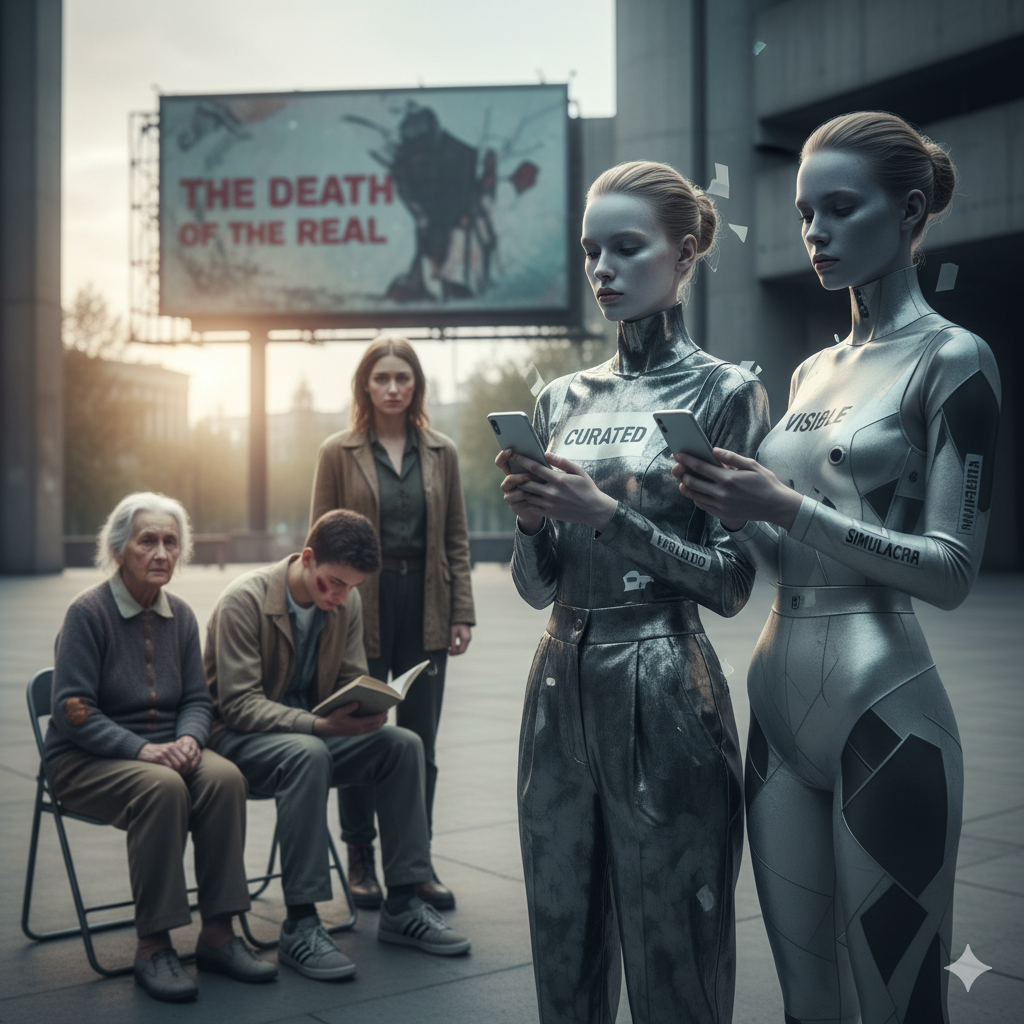
Today, fashion performs the cultural and moral functions once associated with religion. The societal narrative promises belonging, respectability, and redemption, not through the intellect, but through style. It shapes perceptions of what is seen as desirable, modern, and valuable, creating new hierarchies of visibility. Fashioned bodies are glorified and made hyper-visible, while unfashioned bodies are often ignored in all socially important settings. The traditional concept of pollution and purity resurfaces in contemporary forms through beauty ideals, digital filters, and the politics of fitness. The fashionable body becomes the only socially legitimate form of embodiment, while the unfashionable body, marked by fatigue, age, scars, or difference, is stigmatised as shameful, unworthy, or invisible. In this process, the unfashioned body experiences social death. The body that feels, suffers, and decays becomes an object of denial. Fashion’s visual regime teaches individuals to conceal rather than inhabit their bodies. The marks of life wrinkles, scars, sweat, and pain, are seen as flaws to be erased. The result is a paradoxical culture in which bodies are everywhere visible yet profoundly absent. We no longer experience the body; we perform it. The fashioned body is not merely adorned but scripted, endlessly repeated, and regulated in what Judith Butler might call a choreography of social recognition. What remains is a hyper-managed surface luminous but lifeless, endlessly curated but emotionally vacant. The body becomes a living simulation in Baudrillard’s sense, an image that replaces and erases the reality it once represented.The new moral economy of visibility acknowledges only those bodies that serve social or marketable purposes. The body becomes valuable when it can produce images, attract attention, or symbolise control, a form of capital that Pierre Bourdieu might call “embodied distinction.” Social worth now circulates through appearances; recognition depends on how convincingly one maintains the artifice of presence. The aged, the disabled, the poor, the unfashioned, these are the new invisible bodies, alive yet socially unrecognised. Fashion’s logic of selection reproduces inequality under the guise of beauty and taste.
The culture of fashion enacts a slow, aesthetic death. Each act of beautification, though appearing to affirm life, participates in the denial of bodily reality. The body is constantly re-created to meet shifting ideals, each trend burying the previous self. By turning the body into an aesthetic project, a site of perpetual reinvention, individuals become artists of their own disappearance. Their social capital depends not on who they are but on the coherence of their performed identity. The real body, unstyled, unfiltered, unbranded, becomes socially unintelligible. The more we decorate the body, the less we dwell in it; the more we strive for perfection, the further we move from presence. This condition reveals a deeper cultural anxiety, a fear of mortality disguised as aesthetic progress. The secular world cannot tolerate decay; it must mask it with filters, surgeries, and style.
The denial of ageing is not simply vanity but a symbolic revolt against death. Yet this revolt produces the very lifelessness it seeks to escape. The more we pursue the ideal of timelessness, the more we detach from time. In eliminating all evidence of age and tiredness, we eliminate the story of living. Thus, reclaiming the real body is not an act of nostalgia; it is an act of resistance. Reclaiming the real body recognises the body as a site of feeling, vulnerability, and mortality, rather than merely a surface through which to invest art and society. it need to rehumanizing the body moving beyond its economic, aesthetic, and symbolic value to see it again as a medium of being rather than branding. The unfiltered face, the ageing skin, the tired eyes, these are not imperfections they are the truths of our existence. They recall us that to live is not to appear perfect but about embracing our presence in imperfection. Fashion, in its essence, is not the enemy; it becomes destructive only when it replaces life with design. The secular world’s pursuit of the ideal, artistic body is, in reality, a fear of the mortal one. In trying to overcome decay through style, we have turned fashion into a ritual of denial. The result is a culture that appears youthful yet feels exhausted, visible yet disconnected from sensation. The death of the real body, then, is not the death of the biological body but the disappearance of feeling. To be human again is to return to the unadorned, uncurated body to rediscover presence over performance, being over image, art over artifice. Only when we learn to live inside our bodies, and not merely upon them, can we escape the silent death that fashion so elegantly conceals.